Author: Ahon PH

  • Type 2 Fun, All Week: DansxAhon at the PTL (2019)

    Type 2 Fun, All Week: DansxAhon at the PTL (2019)

    DansxAhon at the PTL: A Week in the Alps, 2019

    On August 28, 2019, three Filipinos stood at the start line of La Petite Trotte à Léon (PTL) in Chamonix, France — one of the most extreme events under the UTMB week. Unlike UTMB, CCC, or TDS, the PTL is not about speed. It is about survival. Teams of two or three are given a massive route, hundreds of kilometers through the high Alps, with over 25,000 meters of elevation gain. There are no course markings, only a GPX file handed out shortly before the start. Crews and life bases are minimal. The rest of the week, runners are on their own.

    For 2019, Maria Josephine “Majo” Liao, Aldean Philip Lim, and Benjamin Ramirez — running as DansxAhon Adventure Team — took on the challenge. To our knowledge, no other Filipino team has finished PTL before or since.

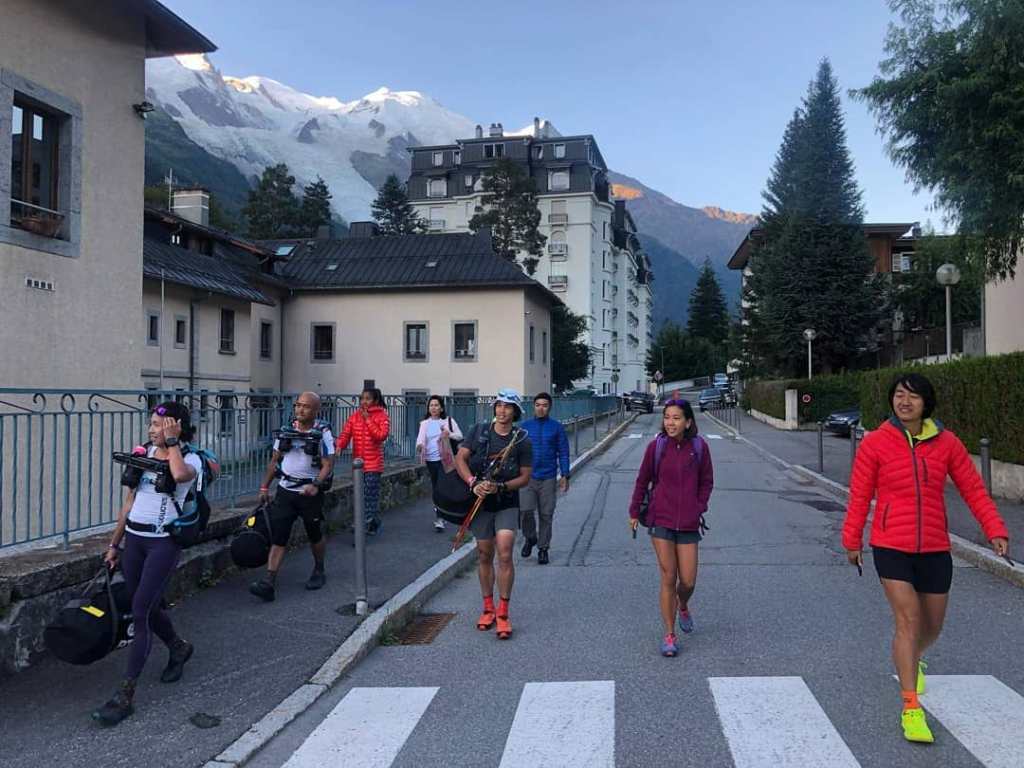
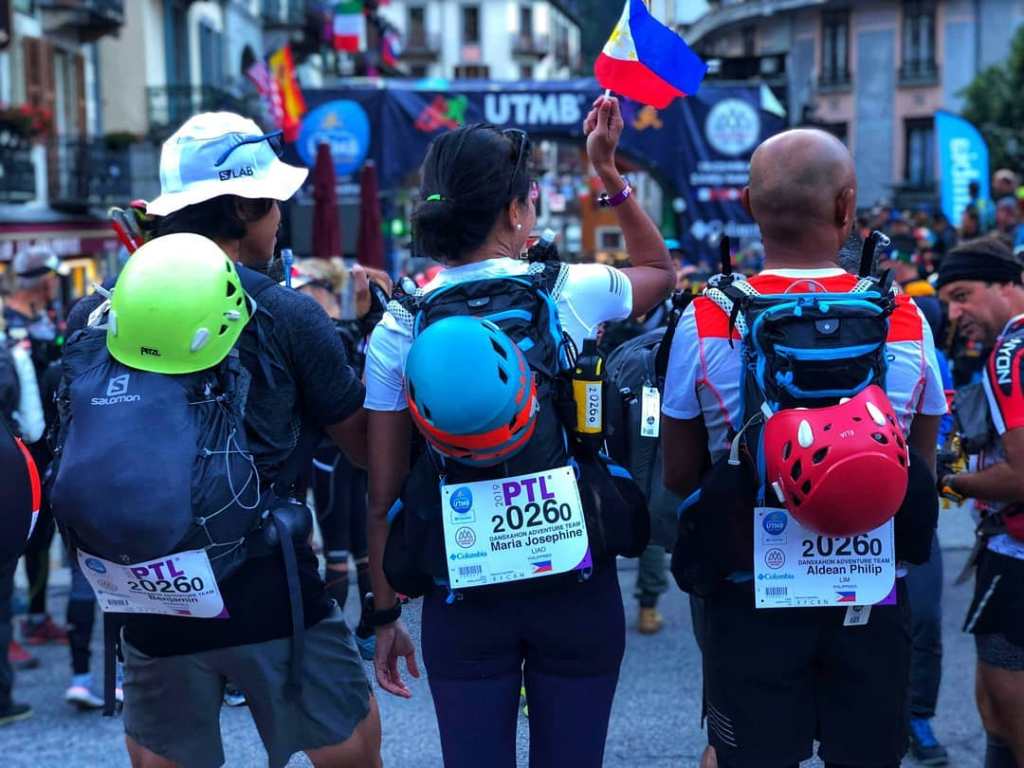
    Jami, Majo, and Aldean before the PTL start.

    Between Races, Into the PTL

    The timing was brutal from the start. The boys had just finished Swiss Epic, a stage mountain bike race, and only had a single day of rest before PTL. On the morning of August 26, they lined up in Chamonix, a little tired, but excited.
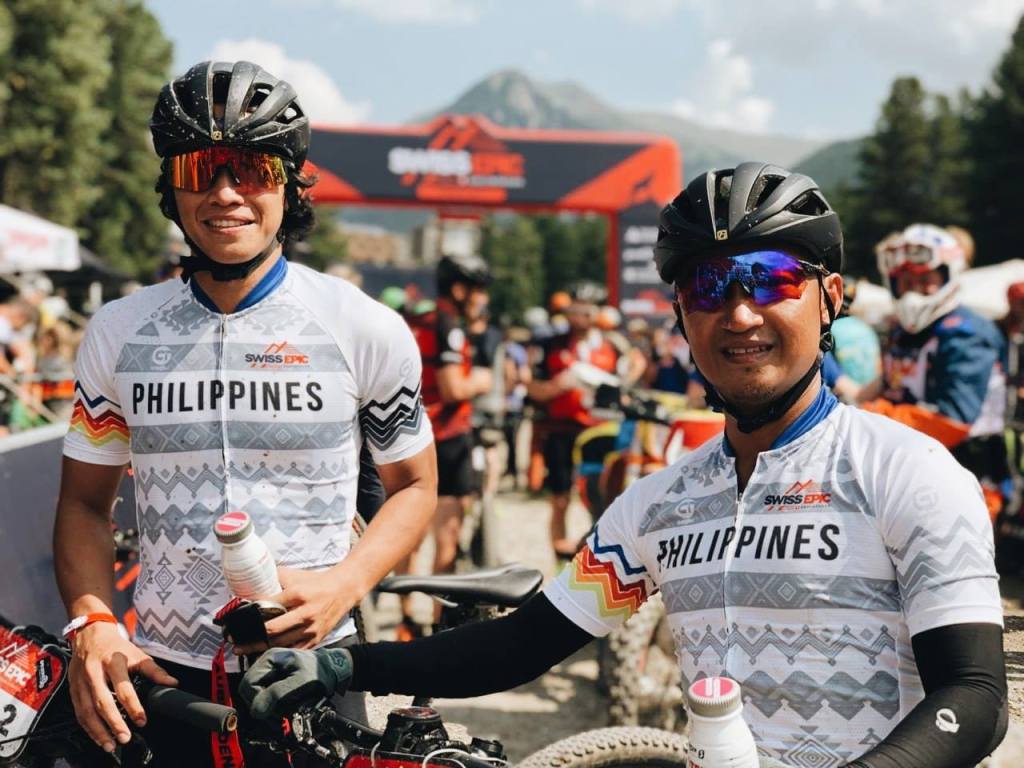
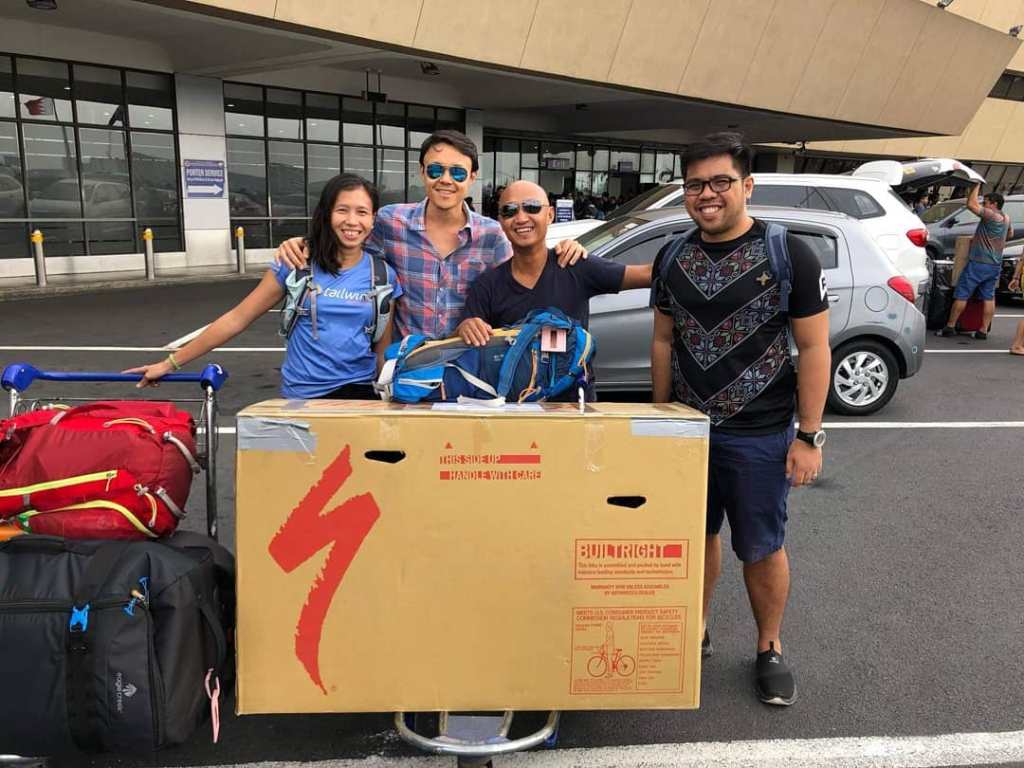
    As if PTL was not hard enough. These boys rode the Swiss alps a few days before.

    “It was not a typical trail race. The GPX and map was only released weeks before. Though we were able to take important points and info about it leading to the event week, we weren’t able to study the full details of the terrain because of traveling and the boys were racing. But it was all good. We were just excited — and that’s more important,” recalls Majo.

    The start was fun. Spirits were high. Then the climbs began.
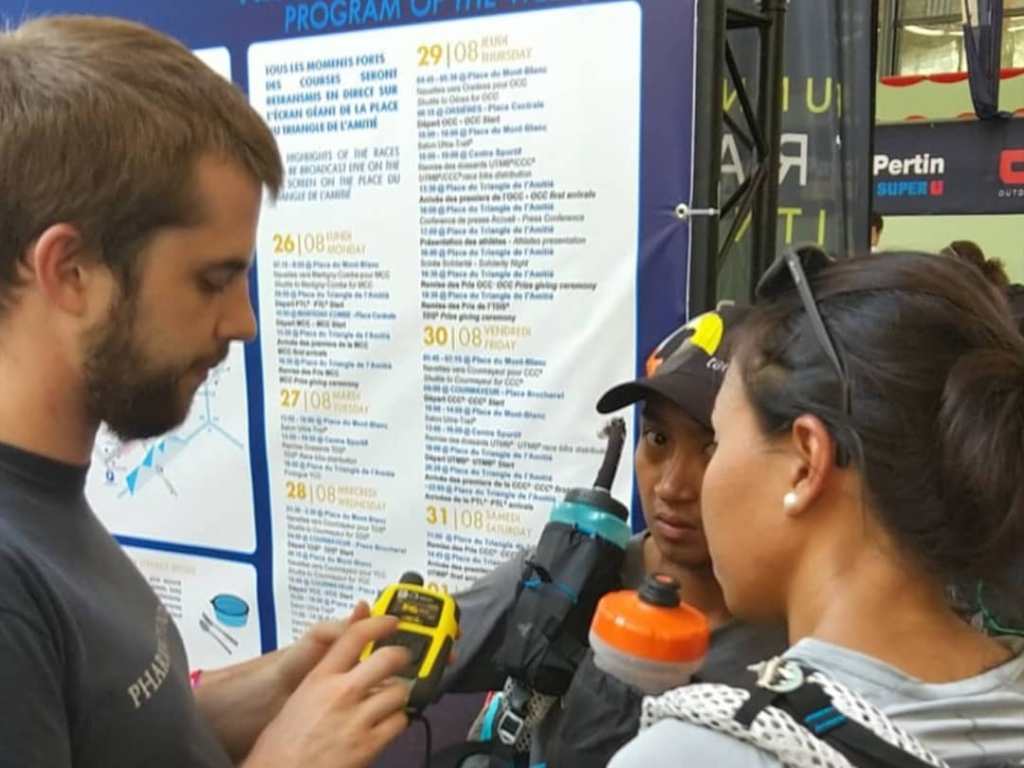
    Last minute instructions with the GPS tracker.

    The Grind of the Alps

    By the end of the first 20 hours, the team had already realized what they were up against. They stopped at a refuge for 3–4 hours to rest, thinking it would help them recover. They were hopeful that the next days will better but PTL was a different beast. They recalculated their goal times and managed their expectations so that they can reach each checkpoints on or before the cutoff time.

    Each day meant 20–22 hours of hiking, climbing 4,000–5,000 meters, and only a few hours of sleep. In total, they were able to sleep 10 hours in the entire week.

    From Majo’s IG stories.

    The terrain was unlike anything in the Philippines. Steep ridges with massive exposure, sections where helmets were mandatory, downhills so sharp that the team resorted to crawling.

    “Aldean has a fear of heights,” says Majo, laughing. “So our strategy was to put him in between — me in front, Jami behind. Sometimes we were helping each other go up  big rocks or practically dragging ourselves down. Medyo vertically challenged tayo e, so you adjust and adapt as much as you can.”

    Powered by Ahon trail socks and gaiters.

    There were boulder fields, off-track sections, and glaciers crossed at 2:00 AM in the dark. One slip could mean a fall into a crevasse. Another time, the team split while searching for the route and Jami’s tracker pinged as dangerously close to a cliff — so close that the organizers called him to warn he was heading toward a drop.

    They witnessed avalanches. They met Ibex that refused to let them pass. They drank from horse troughs when water ran out. They slept under tables in crowded refugios.

    From Majo’s IG stories.

    The route was extremely technical — something that simply doesn’t exist in the Philippines.  Majo adds, laughing, “i thought ready na kami, but it was beyond anything we had trained for. What helped us was our years of outdoor experience. That kept us steady even when things got crazy. And of course we just enjoyed the whole experience. You really need to have the right mental and emotional fortitude to do these kinds of adventure – its a type 2 fun on the next level. Team dynamics were very important.”

    The People You Meet

    As in many ultras, the shared suffering built unexpected friendships. The team connected with Janet Ng’s Hong Kong team, singing Bohemian Rhapsody while climbing and keeping each other sane through the endless uphill and downhill.

    Holding the Line

    There were moments when the DansxAhon team thought they would miss the cutoffs. But they kept pushing. Step by step, ridge after ridge, mountains after mountains through day until night.

    Finally, on Sunday, September 1, 2019, after 147 hours, 45 minutes, 47 seconds, they returned to Chamonix. With more than four hours to spare, they crossed the finish line.

    PTL Finishers.

    Forever etched in Philippine adventure/trail running history.

    One for the Books

    “It was difficult but super fun,” says Majo. “Still one of the best adventures of our lives.”

    For the DansxAhon Adventure Team, PTL was more than just a trail event. It was survival, grit, and teamwork — the essence of what it means to take on mountains far bigger than yourself.

    And for the Philippines, it remains a rare moment: a Filipino team etched into the PTL finisher’s list.
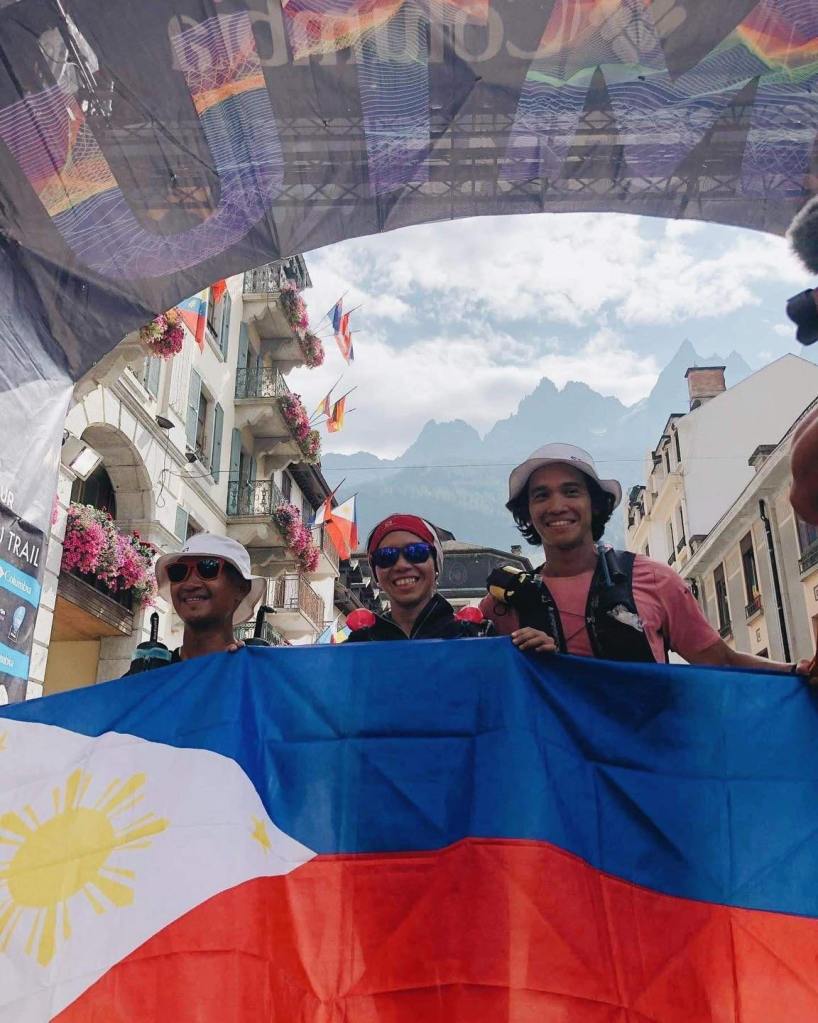
    The Support

    Read next

    • PTL 2019: When Grit Meets Gear (Ahon Blog) — [live on Wednesday]

    A Filipino’s Journey to UTMB (WPS archive)

    Stay close
    • Follow Ahon on IG and FB for stories from the mountains

  • 🇵🇭 A Filipino’s Journey to UTMB (2014 Race Report)

    🇵🇭 A Filipino’s Journey to UTMB (2014 Race Report)

    By Aldean Lim — originally published on Blogspot (2015). Preserved on Wala Pang Strava as part of the Filipino trail running archive.

    This story was first published on Aldean Lim’s Blogspot in 2015. We’re preserving it here on Wala Pang Strava as part of the Filipino trail running archive. Read the original post → https://aldeanlim.blogspot.com/2015/09/filipinos-journey-to-utmb-2014-utmb.html

    Like most people, I have a bucketlist of dream races and last August 2014, I accomplished one of my dreams as an Ultra Trail Runner. I finished UTMB (Ultra Trail Mont Blanc)…

    UTMB 2014 race map. Counter-clockwise.
    The 10 peaks of UTMB

    Qualifying

    Every runner who dreams of UTMB starts small. For me, it was the local races in the Philippines — Clark-Miyamit Falls, TNF100, and the KOTM Hardcore 100 Miles. Each one gave me the points I needed. Each one toughened me up for what was coming.

    CM50 with RD Jon Lacanlale.
    H1 with RD Jonel Mendoza.

    Training & Preparation

    UTMB isn’t just about running. It’s about logistics, gear, visas, long nights planning.

    I trained in our mountains — Rizal’s rolling climbs on weekdays, Batangas’ hot trails on weekends, Benguet’s punishing elevation whenever I could escape. Each session was a rehearsal for the Alps.

    Our staple local trail – AFP-Silangan Road.

    Weekends meant back-to-back long runs, simulating the fatigue of climbing through two nights. Weekly mileage built up into the hundreds, then dialed back down as taper came closer.

    I obsessed over the little things: nutrition strategy, how to run with poles, whether my headlamp would last the foggy nights. The Alps loomed larger than any Cordillera climb, but every session at home was a brick laid for Chamonix.

    Gears

    UTMB has a strict mandatory gear list. I checked, packed, and re-checked every item — paranoid that I’d miss one. Some of it I’d used countless times in the Philippines, but the Alps were a different beast.

    • Waterproof jacket & pants – tested for storms
    • Thermal base layer – backup warmth for the high passes
    • Gloves & beanie – small but lifesaving
    • Headlamp + spare batteries – could it survive two nights?
    • Mobile phone & emergency blanket – never to be used, hopefully
    • Food & water containers – soft flasks, gels, bars
    • Whistle, bib, ID – the tiny things the race marshals always check

    I obsessed over the list for weeks, trimming weight, swapping gear, debating backups. In the end, it wasn’t just about compliance — it was about knowing I had a fighting chance against the mountains.

    Mandatory UTMB gear — every piece checked, re-checked, and tested.

    Race Week

    When you arrive in Chamonix, you know you’re at the heart of world trail running.

    The town is buzzing with athletes from every corner of the globe. Flags, languages, nerves.

    I carried the Philippine flag in my bag. I wanted to raise it at the finish.

    Pre-race check-in.

    Race Start

    The gun went off. Thousands surged forward. I held back, knowing this was a long battle.

    Night 1

    The climbs hit immediately. Darkness came, and with it — doubts. My headlamp faltered. My stomach turned. The Alps were unforgiving.

    Endless headlamps snaking through the night.

    Day 2

    Blisters formed. My pace slowed. Aid stations became my lifelines. Soup, cheese, Coke — small comforts in a long war.

    Going down to Arnuva.

    Night 2

    This was the hardest part. Alone, nauseous, broken headlamp, cold cutting through layers. Many dropped. I pushed on, one step at a time.

    The Finish

    Chamonix came alive as I entered. People cheering, cowbells ringing.

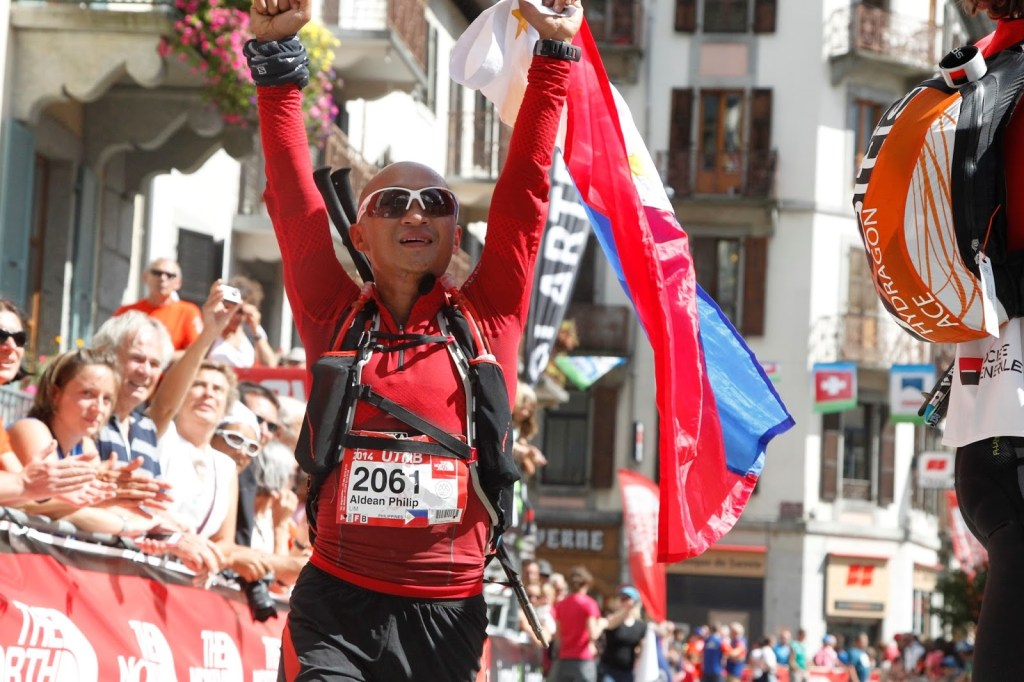
    I pulled out the Philippine flag. I crossed the line. I cried.

    Carrying the Philippine flag across the UTMB finish line.

    Post-Race Thoughts

    UTMB was not just a race. It was survival, discovery, pilgrimage.

    I learned that preparation matters, but spirit matters more.

    Back home, I carried not just a medal, but a memory that will always remind me: Filipinos belong on the world’s toughest trails.

    Closing Notes

    UTMB has grown since 2014. More Filipinos now chase it, more names will echo in Chamonix. But I’ll always remember being among the first. Crossing the finish line in Chamonix was the culmination of years of dreaming… and the start of even bigger ones.


    📌 Related Reads (Wala Pang Strava Archive):


    📌 If you’re chasing your own summit:


    ✍️ Written by Aldean Lim (2015). Republishing coordinated with Ahon Trail for archival purposes. All photos from Aldean’s original post.

    👉 Original version: A Filipino’s Journey to UTMB 2014

  • Hardcore Hundred 2013: Our Holy Grail Trail Ultra

    Published on WalaPangStrava.com

    After TNF100 2008, the local ultramarathon scene started to grow. TNF100 was held yearly — 2009 in Sacobia, 2010 in Baguio (I finished that), 2011–2013 I’m not sure, then 2014 again in Baguio (I finished again), and 2015 in Nuvali. Road ultras also gained momentum. 2009 kicked off with Bald Runner’s Bataan Death March Ultra (BDM102), then Botak 100 on the roads of Quezon City. Those three — TNF100, BDM102, Botak100 — became the unofficial “ultra running grand slam” of that era. I finished BDM and Botak. I DNF-ed TNF100.

    Trail ultra friends “kidnapped” by Atty. Aldean. Race planning somewhere in Ortigas.

    Then on May 31, 2012, Jonel Mendoza announced Hardcore Hundred (H1). The name (not the format) was inspired by Hardrock 100. Jonel, though older, was a peer and friend. He also ran BDM102 and the other early races. His deputies included Isko Lapira — our own David Goggins. He looked the part: skin tone, shaved head, tall, lean, even the tattered white shirt he wore. And he had mountaineering photos in maong shorts! Hardcore talaga.

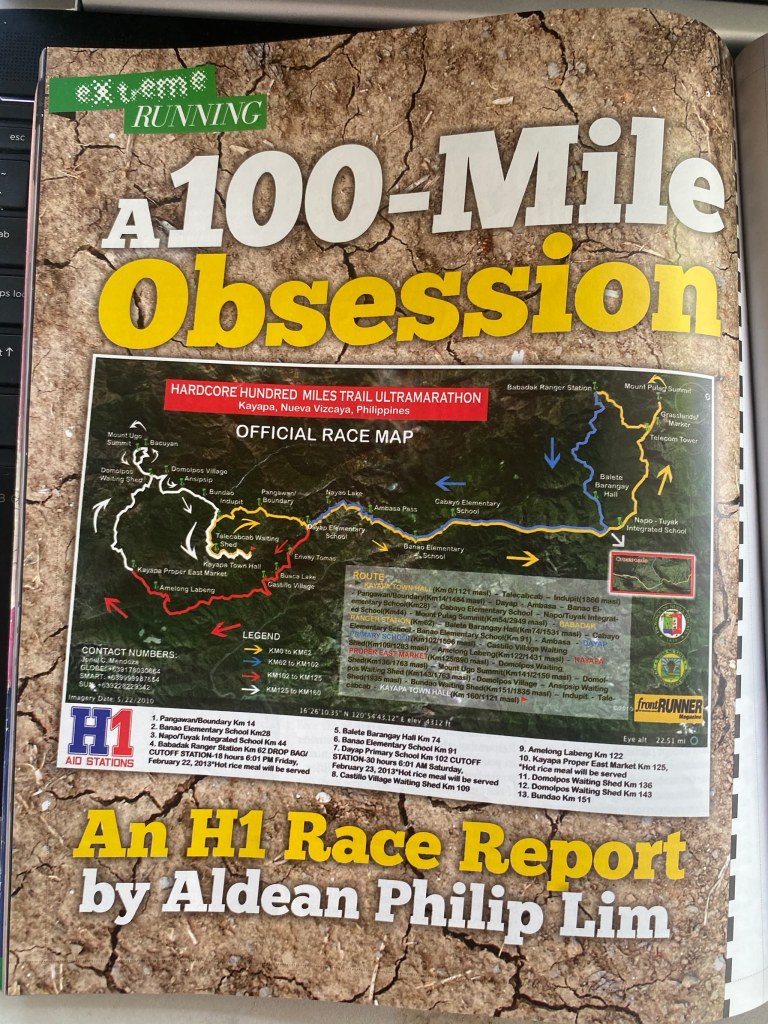
    Race map.

    Enter the Budol

    As usual, Aldean was the source of the budol. He had plans for UTMB 2014 and wanted to use H1 as prep. He recruited me and Wilnar Iglesia — one of the fastest runners back then. You wouldn’t know it by looking at him. He looked like a regular guy, but his superpower? His stomach. He could eat anything mid-race and not suffer. That’s a gift in ultras.

    I was the slowest of the three, and didn’t have solid plans. We registered late in 2012. Bahala na si Batman.

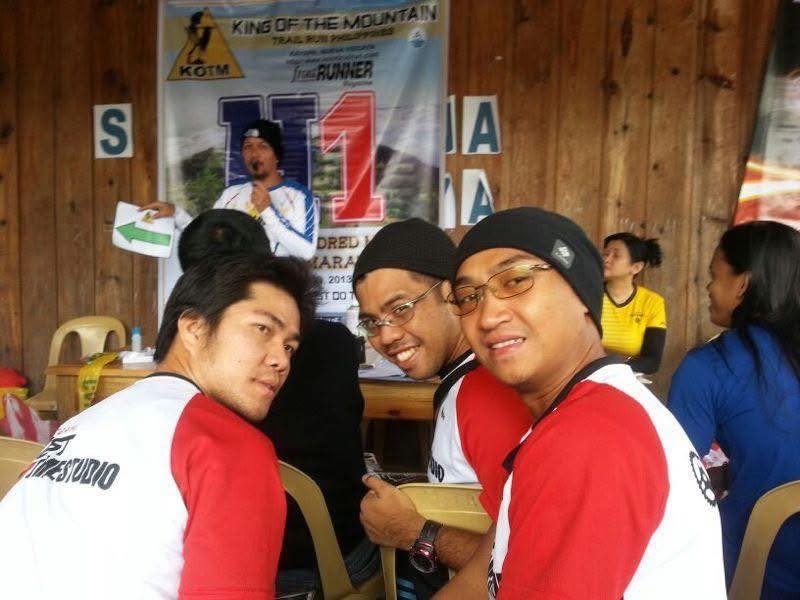
    Pinoy trail runners at the race briefing of a hundred mile trail race.
    Wilnar, me, Aldean — at the race briefing. Jonel at the background.
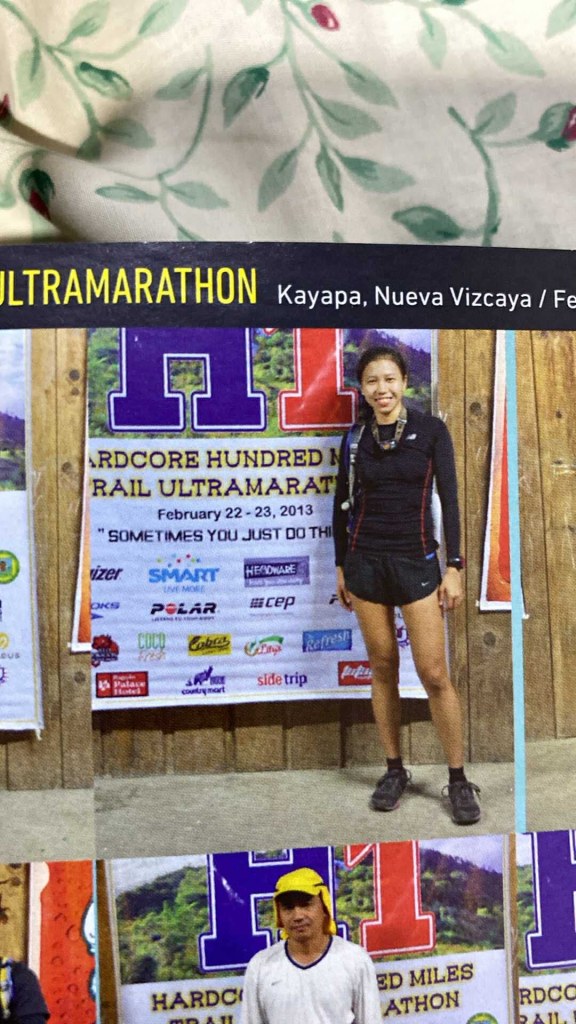
    43 brave runners started Hardcore 100 trail ultra.
    H1 2013 starters. Me, the pasaway, raising hands.

    Rain, Mud, and 100 Miles

    The race started on February 22, 2013 — a Friday midnight. We got to Kayapa on Tuesday and stayed at Baban’s. There were only 43 runners. That meant hours of running without seeing anyone — especially at night.

    Then, one hour before gunstart: rain. Not ambon — as in bagyo. And it was February, so malamig talaga. You could see the stress on people’s faces, but no one dared back out. That wasn’t the culture then. The rain didn’t stop. We all started soaked.

    No Joy, Just Survival

    That night and day, I remember no happy feelings. I was doing something I loved — trails — but I wasn’t happy. It was all misery. Rain. Mud. Cold.

    And being the first edition, it had hiccups. Locals didn’t understand what we were doing. Some removed or played with trail signs. Somewhere in Cabayo, our group got lost — and met another lost group. Around 15 of us were together. The next section was worse: Napo-Tuyak climb. Rainwater was rushing down like a waterfall. Uphill, slippery, dangerous. Then Pulag summit was shortened due to storm conditions. Isko had to leave the turnaround station. At Pulag grassland, the stones were underwater — calf-deep. It felt like stepping in ice water. Again: misery.

    Eventually I reached Babadak Ranger Station before dark. I was exhausted and freezing. I found other runners there, resting. Volunteers gave us hot food. I tried to calculate how I could still finish… then sat by the fireplace. It felt good. I never left. That was my H1 DNF. Many others dropped there too. A few tried to push on, but came back.

    The King of Another Mountain

    Out of 43 starters, only 12 finished. Even Majo didn’t survive. (She later became H1 champ for 7 straight years.)

    Back in Kayapa, we all gathered — DNF-ers, finishers, and volunteers. It was a small community. Most didn’t finish, but everyone was relieved. We were laughing, sharing stories, nursing our wounds.

    The best story? Rocky Go and Alain Llaguno. Two runners who became trail buddies — and got lost early in the race. Everyone was supposed to turn right toward Mount Pulag. They turned left — toward Mount Ugo! That’s why we called Rocky “King of Another Mountain.”

    At one point, Rocky even took off his huarache sandals (don’t ask why) and left them near a cliff. Alain saw them and thought Rocky had fallen. He panicked. Lahat kami tawa nang tawa sa Kayapa.

    getting lost in the mountains.

    What H1 2013 Meant to Me

    I honestly don’t know. I just liked being out there — with friends, with my tribe.

    It didn’t defeat or traumatize me. I even tried to do H1 again (a few times?) but always failed. I realized I may not be mentally built for 100 miles — maybe just 100K. But I also learned: trail ultras need more than strength. You need brains. Navigation. Outdoor confidence. Calmness under pressure.

    H1 was the start of “serious” trail running in the Philippines. You could hack a 100K race — but not H1. It became the holy grail of local ultras. It inspired many other trail events, and became the training ground for runners eyeing UTMB and other prestigious races.

    From the Trail to Today

    Today, we build gear for runners who chase these kinds of stories. We learned from the rain, the mud, and the DNFs. And we poured it all into the shirts, shorts, and systems we now use — not just to survive, but to thrive on the trail.

    🧢 Want to see what we wear now? 👉 What to Wear for a Trail Race in the Philippines

    🎒 Ready to get started? 👉 Start Here

    🔎 Browse Ahon’s gear system: 👉 Gear Tier Guide

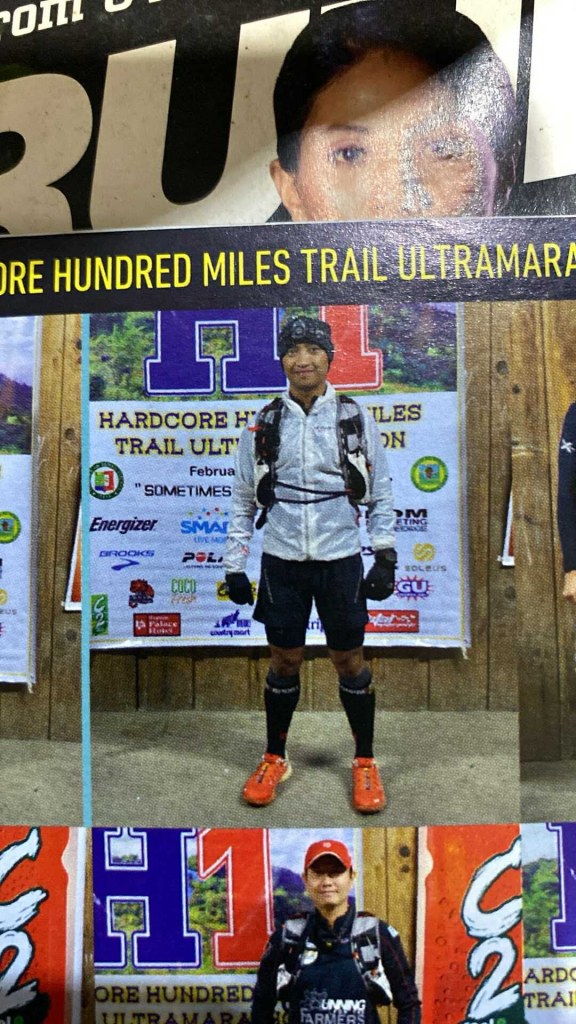
    philippine trail running magazine.
    Aldean wrote his story on Front Runner magazine.

    From that muddy February night in Kayapa to today, we’re still on the trail. We turned those memories into a gear system built for Filipino runners. 👉 Visit AhonTrail.com

  • TNF100 2008: The First Philippine Ultra Trail Race

    📍 Nasugbu, Batangas – July 26–27, 2008

    Before trail running became a scene in the Philippines, it was already happening — quietly, muddy, and under heavy rain. The 2008 edition of The North Face 100 was one of the earliest long-distance trail events in the country. And for the few who showed up that weekend, it wasn’t just a race. It was a turning point.

    TNF100 logo. the start of philippine trail running.

    ✍️ The Backstory

    By 2008, Ronald Declarador was already hiking mountains. He had started road running around 2005–2006, with early races like the Runnex 10K at UP Diliman (₱150 reg fee, singlet included). But trail running? That was still a mystery. When he heard about TNF100, something clicked: “I already hike. I already run. Why not try something that combines both?”

    He signed up for the 100K with friends — Carlos Paredes, a fellow outdoorsman-runner, and Marc (last name forgotten, but remembered for long road runs and jeepney rides home). The farthest they had run in training was 33km on road. Zero trail exposure.

    🏞️ Race Format & Setting

    • Location: Mount Batulao and Mount Talamitam
    • Format: Two loops of 50K each for the full 100K
    • Start/Finish: Evercrest, Nasugbu
    • Date: July 26–27, 2008
    • Weather: Wet, foggy, and unforgettable
    philippine trail running history
    Less than 100 starters for 100k. No 50k category. Photo from Bald Runner.

    The route passed steep ridgelines, forest trails, and open fields. It was mountaineering-grade in places — ropes on Batulao climbs, river crossings near Talamitam, and long, isolated sections with little signage.

    Many runners got their first taste of real trail conditions here: non-stop mud, chilled air, flooded paths, and minimal aid.

    👟 The Gear of the Time

    Back then, there was no clear idea of what “trail gear” meant. Ronald showed up in:

    • TNF Arnuva shoes (yes, hiking shoes)
    • Black Adidas running attire
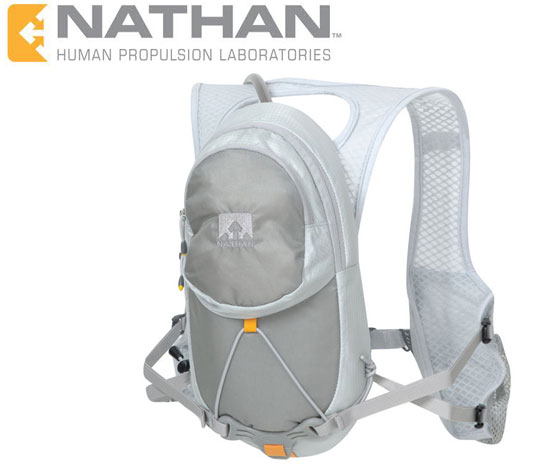
    • Nathan bladder vest (with shallow front pockets — “tech” at the time)
    nathan vest - advanced tech in the 2000s
    This was advanced tech at that time.

    Aid stations were stocked with saba, suman, and kamote. Race kits came in brown office envelopes. Trail tech? Wala pa.

    For a glimpse of how today’s trail gear evolved, see Ahon’s “Race-Ready Shirt” breakdown (soon) — a modern take on how far we’ve come since TNF100 2008.

    🧠 The Mind Game

    Ronald recalls the mental spiral near the halfway mark: After finishing the first 50K loop just before nightfall, the cold fog set in. They saw athletes like Leo Oracion and Retzel Orquiza not continuing.

    “If those guys stopped… why should we keep going?”
    He was already feeling sick. The thought of running the second loop in total darkness — with barely any experience — pushed him and Carlos to stop.

    No regrets, though. Relief outweighed disappointment. That DNF lit a fire.

    ahon co-founder trail running at the 2008 TNF100 philippines.
    Going up Mt. Batulao. Race bib made of tarpaulin.

    🔁 Full Circle

    Looking back, TNF100 2008 wasn’t about finishing. It was about starting something — for many runners, for the community, and for a trail movement that hadn’t yet found its name.

    Today, Ronald writes about gear, trail culture, and the roots of Philippine trail running. You can read the humorous, detailed, and more personal version of this story on his personal blog here.

    And if you’ve ever felt unprepared for a race, know that he once did too — at a time when trail running had no maps, no vlogs, and no blueprint.


  • Wala Pang Strava: Philippine Trail Running Stories from the Early Days

    Wala Pang Strava: Philippine Trail Running Stories from the Early Days

    🏁 Welcome to Wala Pang Strava

    Stories from before the uploads.

    Before the segment crowns and the auto-sync.
    Before race results lived on the cloud.
    Before every run was a post.

    We ran.

    Some wrote blogs. Some kept gear logs. Some just remembered.

    This is an archive for those stories.
    From pre-Strava trail days to forgotten climbs, old race blurbs to lost forum posts — we’re collecting the runs that shaped us, even if no GPS did.

    Got something to share?
    Email: hello@ahontrail.com
    Or visit the Submit a Story page.


    📁 No likes. No leaderboards. Just memory, sweat, and dirt.